Is Minnesota City Tap Water Safe to Drink?
If you rely on city water, a general answer may not settle the question you care about: whether the water coming from your own faucet is safe to drink today. Minnesota public water systems are regulated, but local conditions and household plumbing matter. Here’s how to check your utility’s information, respond to changes in your water, and decide whether a home filter makes sense.
What safe means for Minnesota city tap water
Minnesota city water is usually supplied by a public water system. That system treats and distributes water to customers, and it is responsible for meeting drinking water requirements. According to the Minnesota Department of Health, public water supplies must provide a safe and adequate water supply under the federal Safe Drinking Water Act. The department also says public water systems make sure their water meets all Safe Drinking Water Act standards.
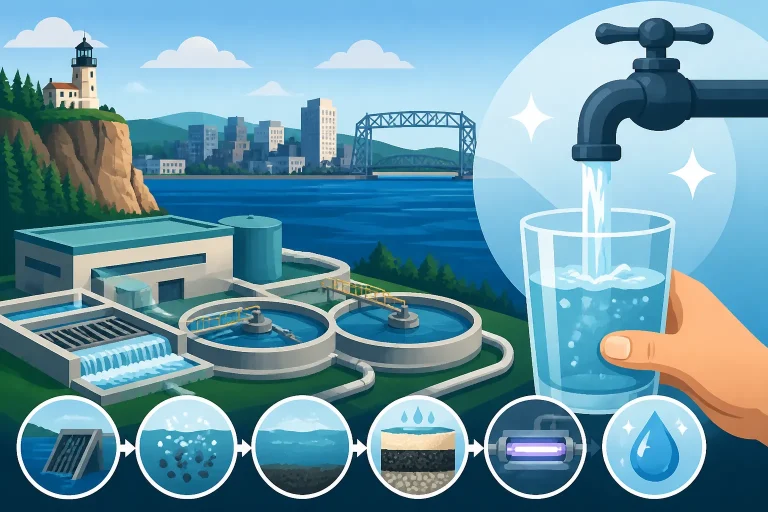
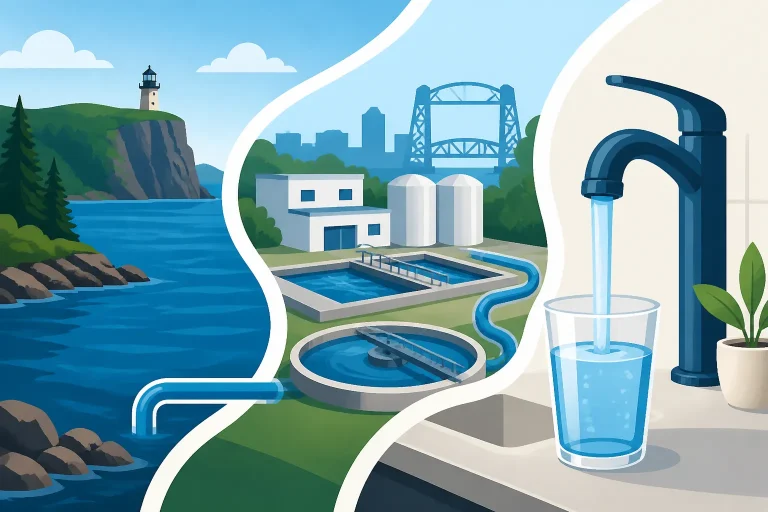
That framework is an important reason not to assume city water is unsafe simply because it comes from a lake, river, or underground source. A source may need treatment before it is distributed. The treatment approach depends on the water system and its source. The finished water is then subject to drinking water standards.
Still, the word “safe” does not mean that every possible substance is measured in every sample, or that a water report can describe the water at every household tap. Standards and monitoring address specified contaminants and system conditions. Some substances may not be covered by a particular report, and results from a utility’s system do not necessarily reveal what is happening inside an individual building’s plumbing.
It helps to separate three questions:
- Is the public water system meeting its requirements? Check the utility’s latest water quality information and notices.
- Is there a current local warning or interruption? Check official utility communications for your service area.
- Could the water change as it passes through your building? Consider the age and condition of household plumbing, fixtures, and any treatment equipment.
The answer can differ between these questions. A system may be operating within drinking water standards while an individual home has a plumbing issue that affects water at the tap. Or the water may meet standards but have a taste or odor that a household dislikes. Those situations call for different next steps.
The water source can also shape how a system treats its supply, but the source alone does not tell you whether finished water is safe. For examples of local supply and treatment context, see How Lake Superior Water Is Treated for Duluth Area Taps and St. Paul Water Sources: How River Water Moves Through Lakes. These examples are useful for understanding how source water and treatment fit together; your own utility’s information is the best place to check the system serving your home.
A practical takeaway: start with the specific water system serving your address, not a statewide assumption. “City water” is not one single supply. Different communities can use different sources, treatment approaches, and distribution networks.
How to check your local water system
The most useful first step is to identify which public water system serves your property. Your water bill, utility account, landlord, or local utility can usually help clarify that. If you live in a rental or a building with a shared meter, ask the property manager which utility supplies the building and whether any building-level treatment equipment is in use.
Once you know the system, look for its current drinking water report and any recent public notices. These materials are designed to help customers understand the system’s water quality and any issues that require attention. The report can provide useful context, but it is not a substitute for checking current notices: a report summarizes monitoring information, while an advisory may respond to a more immediate local condition.
When reading the report, look for the following:
- The system name and reporting period. Confirm that the document is for the utility that serves your property and covers the period you want to review.
- Detected contaminants and reported results. Check what was measured, what the report says was detected, and how the result compares with the applicable standard or benchmark described in the report.
- Violations or monitoring issues. Read any explanation carefully. A missed sample or other monitoring issue is not the same as a confirmed detection, but it may still require follow-up from the system.
- Explanations of health effects or exposure. If a notice raises a concern about health, ask the local health department or a medical professional for advice specific to your situation.
- The utility’s contact information and instructions. Use the official utility website to find current contact details and follow the system’s directions if a concern is reported.
For help finding and understanding system-level information, see Minnesota Public Water: Testing and Consumer Confidence Reports and How to Read Contaminant Detections on a Water Quality Report. A reported detection is not automatically a reason to panic. Its meaning depends on the contaminant, the reported level, the applicable standard, and the context in the report. If the explanation is unclear, ask the utility to clarify what the result means for customers.
A system report also has limits. It describes the monitoring and reporting performed for that public water system; it does not test the water at every kitchen faucet. Household plumbing, a building’s storage or treatment equipment, and conditions within the property can create differences between utility information and what reaches a particular tap. If you have a specific concern about your home, ask the utility whether it can help identify the right next step, and consider a suitable test when appropriate.
If you cannot find a report, do not rely on a search result for a different town or a similarly named utility. Ask the provider that bills for your water or use its official website to locate information for the correct system. For a multi-unit building, check whether the utility serves the property directly or whether water is managed through a landlord or building operator.
Also check for current notices that apply to your address. Notices may be sent through utility channels, posted online, or communicated by other local methods. When in doubt, verify that the notice covers your location and applies to the water you receive. Boil-Water Advisories in Minnesota: Rules and Disinfection Steps explains why an advisory can change what customers should do, while Do Not Drink vs Boil Water Advisories: Minnesota Differences covers an important distinction between notice types.
What a water quality report can and cannot tell you
A water quality report is a starting point for understanding the public supply. It can summarize the utility’s monitoring, describe reported results, and explain whether an issue was identified. It can also help you ask better questions. If a contaminant appears in the report, check how the utility describes it, what comparison standard is provided, and whether the report identifies any required response.
The report is not a guarantee that every possible substance is absent. It is also not a direct test of water from your faucet. That matters because a sample taken or collected for system monitoring represents the system under the conditions and procedures described by the utility. It cannot automatically tell you whether water sitting in your home’s pipes, passing through a fixture, or moving through building equipment has the same characteristics.
A report may also use technical terms that are easy to misread. “Detected” does not, by itself, tell you whether the result exceeds a standard or what action is appropriate. “Not detected” does not mean that a substance could not exist at any level; it means the result was not reported as detected under the test and its reporting limits. The report’s own definitions and explanations matter. For more detail on interpreting that kind of result, see How to Read Contaminant Detections on a Water Quality Report.
When comparing results across systems or documents, avoid drawing conclusions from a single number without context. Confirm that the documents cover the same contaminant, use comparable units, and refer to the same reporting period or sampling location. If the report gives a standard or limit, read its explanation rather than assuming that every result has the same meaning.
A report may also distinguish between a system-wide issue and a concern limited to a particular site or part of the distribution network. If the report uses unfamiliar terms, ask the utility what area the result represents and whether it has issued instructions for customers. For a personal health question, contact a local health department or medical professional rather than trying to interpret a technical result as medical advice.
Here is a simple way to use the report without overreading it:
| What you find | What it can help answer | What to do next |
|---|---|---|
| A contaminant result | Whether the report lists a measured result and how the utility compares it with a standard | Read the explanation and ask the utility about anything unclear |
| A violation or monitoring concern | Whether the utility describes a compliance or sampling issue | Check the stated response and look for current notices |
| No entry for a substance you are concerned about | Whether that report includes information on that substance | Ask the utility what monitoring information is available; do not assume the substance was tested |
| A general system description | Which source or treatment information the utility provides | Use it as context, not as a substitute for current results |
| A concern specific to your home | Whether system-level information answers a household question | Ask whether a home sample or plumbing assessment is appropriate |
If your concern involves a specific contaminant, a general water report may not answer it. Find out whether the utility has relevant monitoring data, whether the concern is associated with the public supply or the property, and whether a test is appropriate. Test selection matters: a test designed for one substance may not reveal another, and an unsuitable sample can lead to misleading conclusions.
Why water at your faucet may differ from system information
Water travels through a distribution network and then through the plumbing within a property. That means the utility’s treatment and monitoring are only part of the picture at a particular faucet. The condition and material of service lines, indoor plumbing, fixtures, filters, softeners, and other equipment can affect the water after it leaves the treatment plant.
Lead is one example where the distinction matters. The concern may involve plumbing materials rather than the source water or treatment process. A system-level report does not establish whether a particular home has lead-containing components or what a sample from that home would show. If lead is your concern, review Lead in Minnesota Tap Water: Pipe Goosenecks vs Indoor Plumbing and Did Tap Lead Come From the Street Connector or Home Fixtures?. These topics can help you distinguish between utility-side and household factors.
The water can also sit in pipes for a period before someone uses it. Changes in water use, repairs, building work, or a fixture issue may affect what you notice at a particular tap. If you suspect a plumbing-related concern, identify where it occurs: one faucet, several taps in the same building, or multiple properties in the area. That pattern is useful information to share with the utility, landlord, or a qualified plumbing professional.
In a rental, ask the landlord or property manager whether there has been plumbing work, whether the building has treatment equipment, and who is responsible for maintaining it. If only one faucet is affected, the problem may be local to that fixture or its plumbing, but that observation alone does not identify the cause. If several taps or nearby properties are affected, contact the water utility to ask whether it knows of a distribution issue.
A home water test may be appropriate when you need information about your own tap rather than the public system. Before arranging one, define the question you want answered. Are you concerned about a particular contaminant, a plumbing material, a taste change, or a treatment device? The answer helps determine what to test, where to collect the sample, and whether a qualified laboratory or professional should be involved. For lead concerns, see How to Test Your Home Tap Water for Lead in Minnesota.
Do not assume that a household filter or a clear-looking sample resolves every concern. Treatment products are designed for specific purposes. If you are considering a filter, the relevant question is whether it is certified to reduce the contaminant you are concerned about and whether it is suitable for the water and plumbing where it will be used. A filter should be selected based on a defined need, not just because the water comes from a municipal supply.
What to do when the water changes or a notice is issued
A sudden change in taste, odor, color, or pressure deserves attention, but it does not automatically mean the water is unsafe. Some changes may be temporary or related to plumbing or utility work; other changes may need investigation. Do not diagnose the cause from appearance or smell alone.
Start by checking whether the change is limited to one faucet or occurs throughout the home. If it is only at one fixture, inspect whether the aerator or fixture may be involved, or ask a qualified plumber to assess it. If the change affects several taps, check official utility notices and contact the utility for information. If neighbors report the same issue, include that detail when contacting the utility.
For an unusual taste or smell, note when it started, which taps are affected, and whether the water’s appearance or pressure changed too. Avoid assuming that an odor identifies a particular contaminant. See Minnesota Tap Smells or Tastes Off: Hazard or Just a Nuisance? for a closer look at how to think through these changes. If the issue persists or the utility cannot explain it, ask whether testing or a plumbing assessment is appropriate.
If there is a public notice, read the full instructions and confirm that your address is included. Different notices can call for different actions. A boil-water advisory is not interchangeable with a notice telling customers not to drink the water or not to use it. Follow the instructions issued for your location rather than applying advice meant for a different notice or community. For differences between common notice types, see Do Not Drink vs Boil Water Advisories: Minnesota Differences.
Use official utility or agency information to verify a notice, especially if you receive a forwarded message or see a post that does not name the affected area. If you are unsure whether the notice applies to your property, contact the utility using current information on its official website. Do not use a general statewide article as a substitute for a current, location-specific instruction.
If a notice involves a possible health risk, follow the notice’s instructions and direct questions about personal health to a local health department or medical professional. If someone in your household has a specific medical concern, do not try to resolve it by guessing from a report or by choosing an unverified treatment product.
A change in water pressure can also be worth reporting, particularly if it follows nearby work or a service interruption. Do not assume that pressure changes mean contamination, but do not dismiss a utility notice or an ongoing unusual condition either. Ask the utility whether it is aware of an issue in your service area and whether customers should take any action.
Should you use a home water filter?
Many households on public water do not need a filter for safety. Others choose one to address a specific taste or odor preference, a known plumbing concern, or a contaminant identified in relevant information or testing. The right choice depends on the problem you are trying to solve.
Begin by defining the goal. A filter chosen for taste may not be certified to reduce lead or another contaminant. A product designed for one contaminant should not be assumed to reduce all others. Check the product’s certification and reduction claims against your water test results or the concern identified by the utility. If you have no specific concern, a filter may be a preference rather than a necessity.
The type of system also matters. A point-of-use device treats water at a particular tap or point of use. A whole-house system treats water entering the home. These approaches serve different purposes and can have different installation and maintenance needs. For a comparison, see Does Your Minnesota Municipal Water Actually Need a Filter?.
Before buying or installing a system, check:
- The specific contaminant or quality issue. Identify what you want the equipment to reduce or address.
- The product’s certification. Confirm that the certification covers the contaminant and reduction claim you need.
- Where the system is installed. Make sure the treatment location matches how you plan to use the water.
- Maintenance requirements. Filters and treatment equipment require appropriate replacement or service. A neglected unit may not perform as intended.
- Compatibility with your plumbing and water. Ask a qualified professional when installation, pressure, or other equipment is involved.
A filter is not a substitute for following an official advisory. If a utility issues a notice with specific instructions, follow those instructions rather than assuming a household filter will make the water suitable for every use. Likewise, do not treat a filter as proof that an unresolved contamination concern has been addressed. If a health question is involved, contact the local health department or a medical professional.
For homeowners and renters, installation responsibility may differ. Before modifying plumbing, check with the landlord, building manager, or a qualified installer. Renters who want a temporary option can ask the property manager about the building’s water and plumbing, and check that any portable device is certified for the intended use. Do not rely on a product description alone; verify the certification and follow the manufacturer’s maintenance instructions.
A practical way to make the decision
When the question is “Is my Minnesota city tap water safe?”, use a sequence that separates the public supply from what may be happening at home.
- Identify the water system. Confirm the utility serving your address, especially if you live in a rental or shared building.
- Check the current report. Read the utility’s water quality information and note any detections, violations, or explanations that relate to your concern.
- Look for current notices. Confirm whether an advisory or service notice applies to your location, and follow its instructions.
- Consider where the issue occurs. One faucet, a whole building, and a wider neighborhood can point to different kinds of questions, although none alone proves the cause.
- Ask targeted questions. Contact the utility about system information, the landlord about building plumbing, or a qualified professional about a property-specific plumbing issue.
- Test only when it answers a defined question. Choose a suitable sample location and test for the contaminant you are concerned about.
- Choose treatment based on evidence. Match any filter or treatment equipment to the specific contaminant and check its certification, installation needs, and maintenance.
This approach avoids two common mistakes: treating every taste or appearance change as proof of danger, and assuming that a public system’s overall compliance answers every question about a particular home. The utility’s information is important, but the property and the current situation matter too.
If the utility confirms that its system meets applicable requirements and there is no active notice for your area, that is useful evidence about the public supply. It does not replace a property-specific check when the concern is a particular faucet, a known plumbing material, a treatment device, or an unusual change inside the building. If the available information does not resolve your question, ask the relevant utility or qualified professional what evidence would.
Frequently Asked Questions
Is Minnesota city tap water generally safe to drink?
Minnesota public water systems are required to provide a safe and adequate water supply under the federal Safe Drinking Water Act, according to the Minnesota Department of Health. For a specific answer about your service area, check the utility’s current report and notices.
Does a water quality report tell me exactly what is in my home’s tap water?
Not necessarily. A report describes system monitoring and results, but it is not a test of every faucet or building’s plumbing. A home-specific concern may call for a suitable sample or plumbing assessment.
Should I buy a filter just because I use city water?
Not automatically. First identify the issue you want to address, then check that the product is certified for that contaminant or purpose. Follow maintenance instructions and do not use a household filter as a substitute for an advisory.
What should I do if my water suddenly smells or looks different?
Check whether the change affects one faucet or multiple taps, look for a current utility notice, and contact the utility if the change continues or affects the home broadly. Appearance and odor alone cannot identify the cause.
Sources
- Minnesota Department of Health — Preventing Illnesses from Drinking Water – MN Dept. of Health (checked November 13, 2026)
- Minnesota Department of Health — Home Water Treatment Facts – MN Dept. of Health (checked November 13, 2026)
Disclaimer
This article is for general informational purposes only and does not constitute professional advice. Laws, prices and regulations vary by location and change over time. Consult a qualified professional for guidance on your specific situation. Minnesota Water Guide is not a government agency or water utility and is not affiliated with any public water system.